The way people access the internet has changed dramatically over the past decade. Gone are the days when web browsing was an activity reserved for desktop computers and laptops. Today, the majority of internet users around the world — and particularly in the UAE — access websites primarily through their smartphones. According to recent digital reports, the UAE has one of the highest smartphone penetration rates in the world, with over 90% of the population using mobile devices as their primary means of accessing online content. This seismic shift in user behavior has made responsive web design not just a best practice, but a fundamental requirement for any business that wants to maintain a credible and competitive online presence.
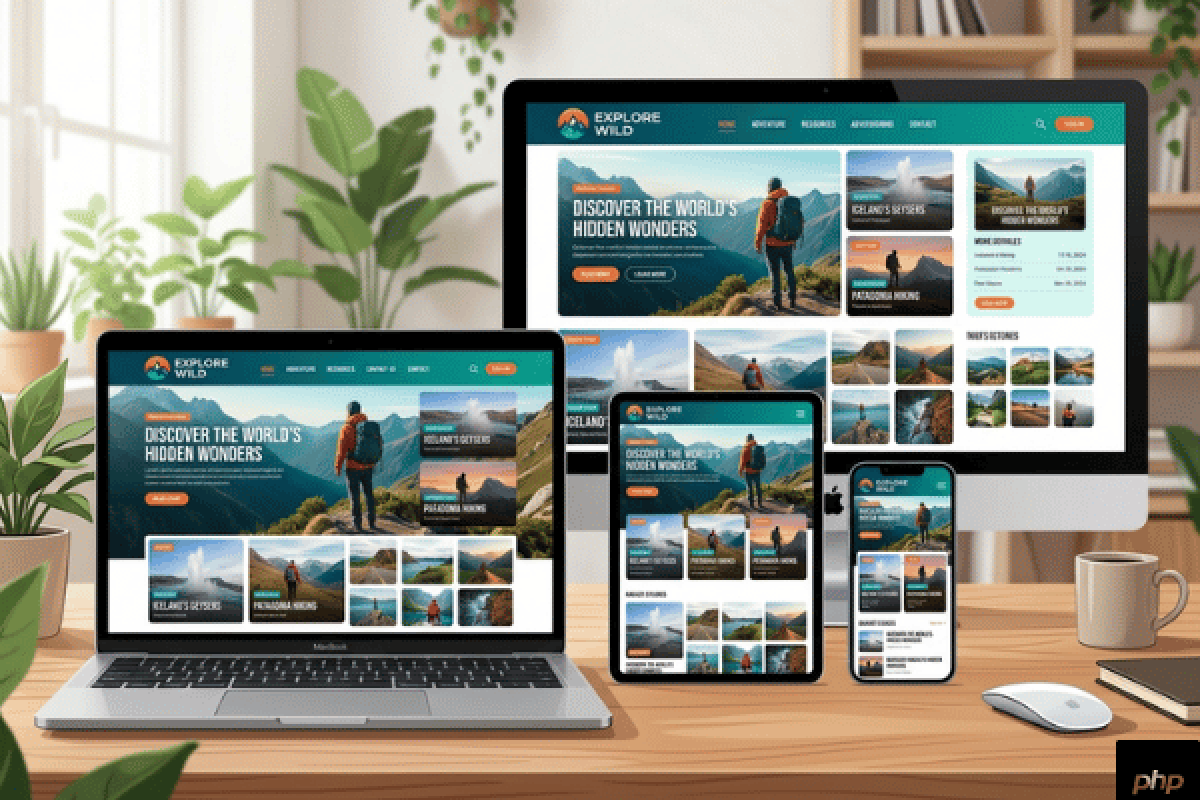
Responsive web design is the approach of building websites that automatically adapt their layout, content, and functionality to fit any screen size — whether a large desktop monitor, a tablet, or a small smartphone screen. Rather than building separate websites for different devices, a responsive design uses flexible grids, fluid images, and CSS media queries to create a single website that looks and works perfectly on every device. For businesses in Dubai, this means that whether a potential customer discovers your brand on their laptop at the office or on their phone while commuting on the Metro, they will have the same seamless and professional experience that reflects well on your brand.
The Business Case for Responsive Design
The argument for responsive web design goes far beyond aesthetics. It is fundamentally a business performance issue. Research consistently shows that users who have a poor mobile experience on a website are unlikely to return — and are very likely to go directly to a competitor instead. For e-commerce businesses, the stakes are even higher: a poorly optimized mobile checkout experience can directly translate into abandoned carts and lost revenue. For service businesses, a website that is difficult to navigate on a smartphone means potential customers cannot easily find your contact details, read your service offerings, or fill out an inquiry form — resulting in lost leads and missed opportunities.
In Dubai's highly competitive business environment, where consumers have access to a vast range of options at their fingertips, the quality of your digital experience is often the deciding factor between a customer choosing your business or a competitor. A professional, fast, and mobile-friendly website communicates credibility and attention to detail — qualities that matter enormously to discerning customers in the UAE market. Conversely, a website that appears broken or difficult to use on mobile sends a negative signal about the quality and professionalism of your business overall.
Google's Mobile-First Indexing
Beyond the direct impact on user experience, responsive web design has a profound effect on your website's search engine performance. In 2019, Google officially switched to mobile-first indexing for all websites — meaning that Google's crawlers now primarily use the mobile version of a website to determine its ranking in search results. This was a watershed moment for SEO, effectively making mobile optimization a prerequisite for ranking well in Google searches. Websites that are not optimized for mobile devices are penalized in search rankings, regardless of how good their desktop experience is.
For businesses in Dubai that rely on organic search traffic for leads and customer acquisition, this means that failing to invest in responsive design directly costs them visibility in Google's search results. A competitor with a mobile-optimized website will consistently outrank a non-responsive website for the same search terms — capturing the customers that should be coming to you. Google's Core Web Vitals update further reinforced the importance of mobile performance, introducing specific metrics for loading speed, interactivity, and visual stability that directly affect search rankings and must be optimized for mobile devices.
Key Elements of Effective Responsive Design
Building a truly responsive website requires careful attention to several key technical and design elements. The foundation of responsive design is a flexible grid system — typically built using CSS Flexbox or Grid — that allows page elements to reflow and resize naturally as the screen width changes. Rather than defining fixed pixel widths, responsive layouts use relative units like percentages, viewport units, and ems to create proportional relationships between elements that hold up across all screen sizes.
Images are another critical element of responsive design. Large, unoptimized images on a desktop website can be devastating on mobile — both in terms of load time and visual layout. Responsive images use the srcset attribute or CSS techniques to serve appropriately sized images for each device, ensuring that mobile users are not downloading unnecessarily large files that slow down their experience. Lazy loading further improves performance by deferring the loading of off-screen images until they are needed, reducing initial page load times.
Typography and touch targets are often overlooked aspects of responsive design that have a significant impact on usability. Text must be readable without zooming on small screens, requiring minimum font sizes and appropriate line heights. Buttons and interactive elements must be large enough to tap comfortably with a finger — Apple's Human Interface Guidelines recommend a minimum tap target size of 44x44 points. Navigation menus must transform gracefully from a full horizontal menu on desktop to a compact hamburger menu on mobile, providing access to all pages without cluttering the small screen.
Responsive Design and Conversion Rate Optimization
A well-executed responsive design is one of the most impactful tools available for improving conversion rates. When users can easily navigate your website, read your content, and take action — whether that is making a purchase, submitting a contact form, or calling your business — on any device, conversions naturally increase. Studies have shown that mobile-optimized landing pages convert significantly better than their non-responsive counterparts, simply because they eliminate the friction and frustration that users experience when trying to interact with a poorly adapted desktop layout on a small screen.
For e-commerce businesses in particular, the mobile checkout experience is critical. A streamlined, mobile-optimized checkout flow with large input fields, clear error messages, and one-tap payment options can dramatically reduce cart abandonment rates and increase completed purchases. For service businesses, a mobile-friendly contact form or WhatsApp integration button can be the difference between a lead converting or bouncing. Every element of a responsive design should be considered through the lens of how it supports the user's journey toward the desired conversion action.
The Cost of Not Going Responsive
Some businesses still resist investing in responsive design, viewing it as an optional enhancement rather than a core requirement. This perspective carries a significant hidden cost. Every day that your website delivers a poor mobile experience is a day that potential customers are choosing competitors with better-optimized sites. Every month that your non-responsive website underperforms in Google's mobile-first search rankings is a month of lost organic traffic and leads. And every year that passes without a mobile-optimized website further erodes your brand's credibility in the eyes of a mobile-first audience that expects seamless digital experiences as a baseline standard.
The cost of retrofitting a non-responsive website with mobile optimization is almost always higher than building responsively from the start. Redesigning an existing website to be responsive requires significant rework of the CSS, layout, and often the HTML structure — work that can easily equal or exceed the cost of the original development. For businesses planning a new website or considering a redesign, the message is clear: responsive design is not an add-on to consider — it is the foundation to build on.
Responsive Design Best Practices for 2025
As web technologies continue to evolve, responsive design best practices have advanced significantly. The mobile-first approach — designing and developing for mobile screens first, then progressively enhancing the layout for larger screens — has become the industry standard. This approach forces designers and developers to prioritize the most essential content and functionality, resulting in leaner, faster, and more focused experiences across all devices. CSS Grid and Flexbox have largely replaced older float-based layout techniques, providing more powerful and intuitive tools for creating responsive layouts. Modern CSS features like container queries are enabling even more granular responsive behavior, allowing components to adapt based on their own width rather than just the viewport width.
Conclusion
Responsive web design is no longer a feature — it is the standard. For businesses in Dubai and across the UAE, investing in a fully responsive website is one of the highest-return digital investments available. It improves user experience, boosts search engine rankings, increases conversion rates, and strengthens brand credibility across every touchpoint. As mobile usage continues to grow and Google continues to prioritize mobile performance in its ranking algorithms, the gap between responsive and non-responsive websites will only widen. If your business website is not delivering a seamless experience on every device, now is the time to change that — and position your brand for success in a mobile-first world.