When a business in Dubai decides to build or rebuild its website, one of the most consequential early decisions is the choice of platform. Two names that consistently come up in these conversations are WordPress and Laravel — two technologies that dominate the web development landscape for very different reasons and serve very different purposes. WordPress powers over 43% of all websites on the internet, making it the most widely deployed content management system in the world. Laravel, meanwhile, has emerged as the most popular PHP framework among professional developers, celebrated for its elegant architecture, powerful features, and suitability for building custom web applications of any complexity. Understanding the strengths, limitations, and ideal use cases of each platform is essential for making the right choice for your specific business needs.
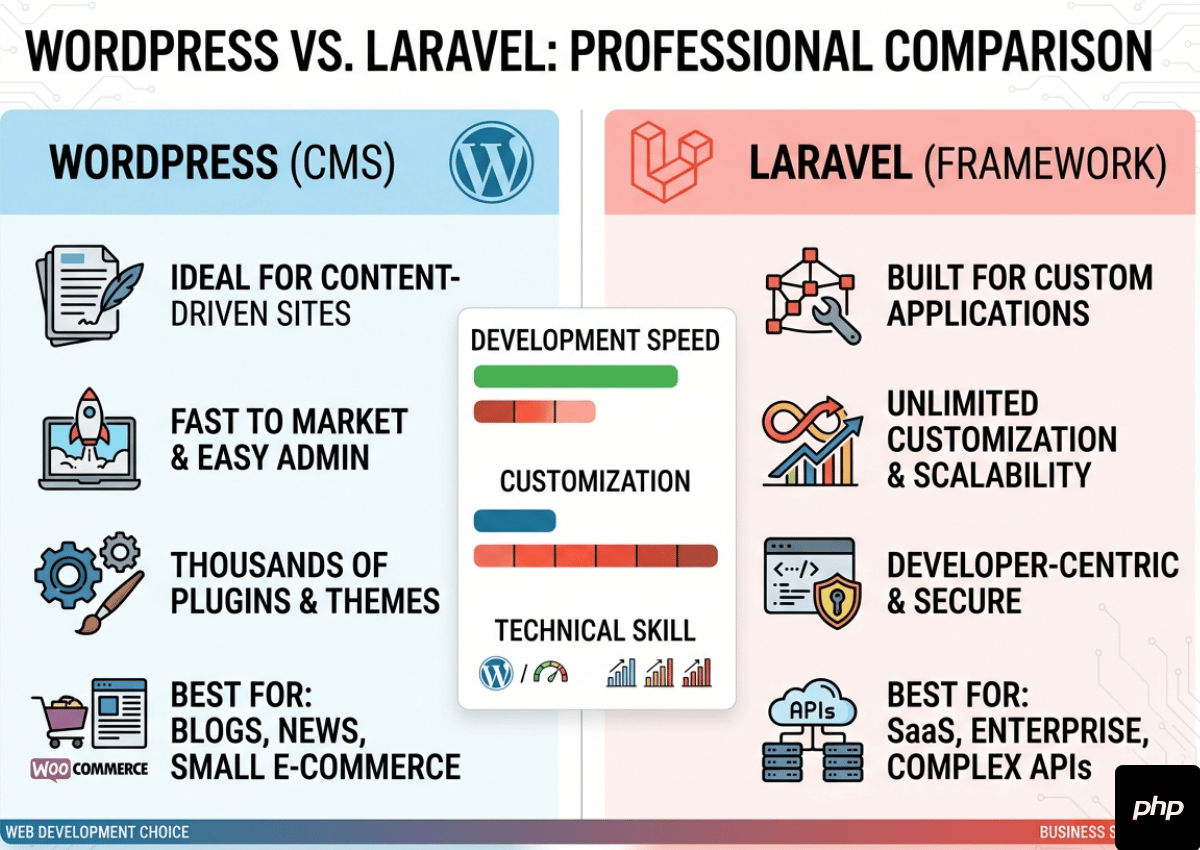
The fundamental difference between WordPress and Laravel lies in their nature and purpose. WordPress is a content management system — a pre-built platform designed to make it easy for non-technical users to create and manage websites without writing code. It provides a ready-made administrative interface, a vast library of themes for designing your site's appearance, and thousands of plugins for adding functionality. Laravel, by contrast, is a development framework — a set of tools, conventions, and libraries that professional developers use as the foundation for building custom web applications from scratch. WordPress gives you a head start by providing pre-built functionality; Laravel gives you complete freedom and control by providing a powerful foundation to build anything you can imagine.
When WordPress is the Right Choice
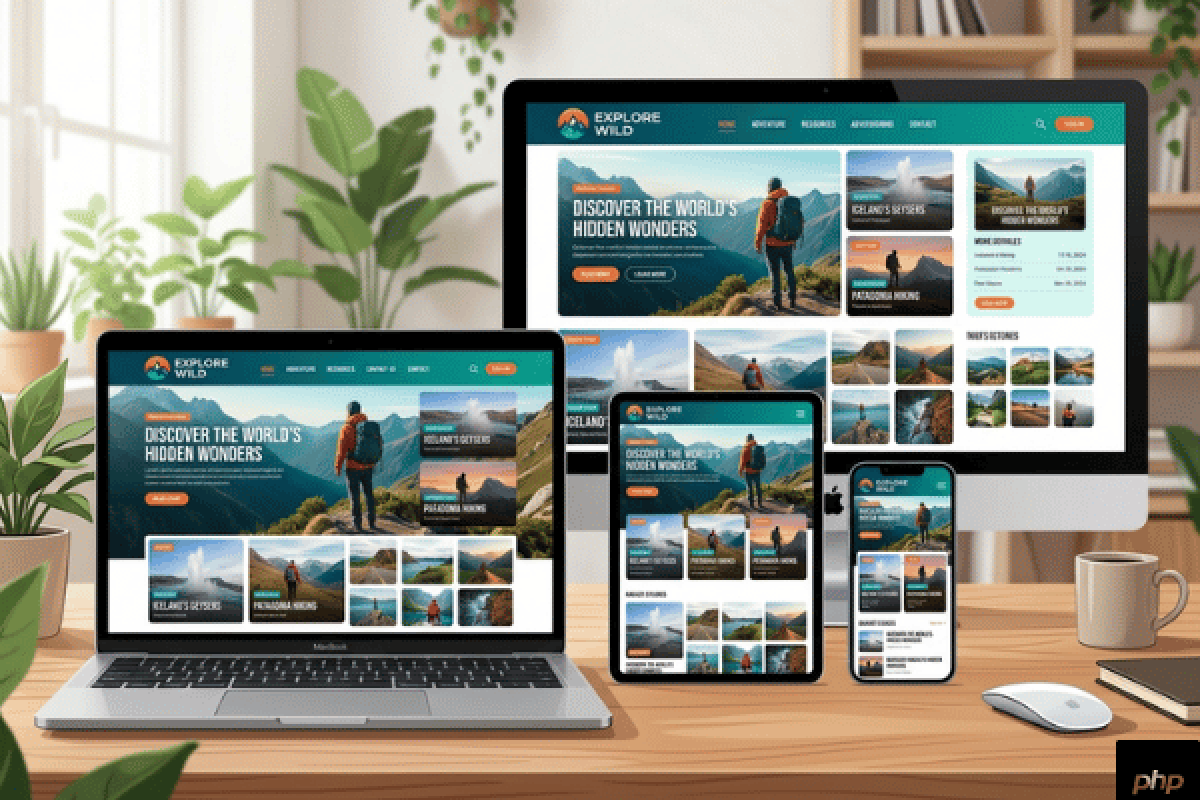
WordPress excels in scenarios where speed of deployment, ease of content management, and budget efficiency are the primary priorities. For businesses that need a professional website primarily for content publishing — a corporate brochure site, a blog, a news portal, or a portfolio — WordPress provides an excellent solution that can be built and launched quickly at relatively low cost. The platform's intuitive admin interface means that non-technical team members can add pages, publish blog posts, update images, and manage content independently after the site is built, without needing to involve a developer for routine updates.
WooCommerce, the most popular e-commerce plugin for WordPress, extends the platform into a capable online store solution for small to medium-sized businesses with relatively straightforward product catalogs and standard checkout requirements. The availability of thousands of pre-built themes and plugins means that many common website requirements — contact forms, SEO optimization, social media integration, email newsletter signup, gallery displays, and more — can be added with minimal development effort. For startups and small businesses in Dubai with limited budgets and a need to launch quickly, WordPress can be an extremely practical and cost-effective choice.
When Laravel is the Right Choice
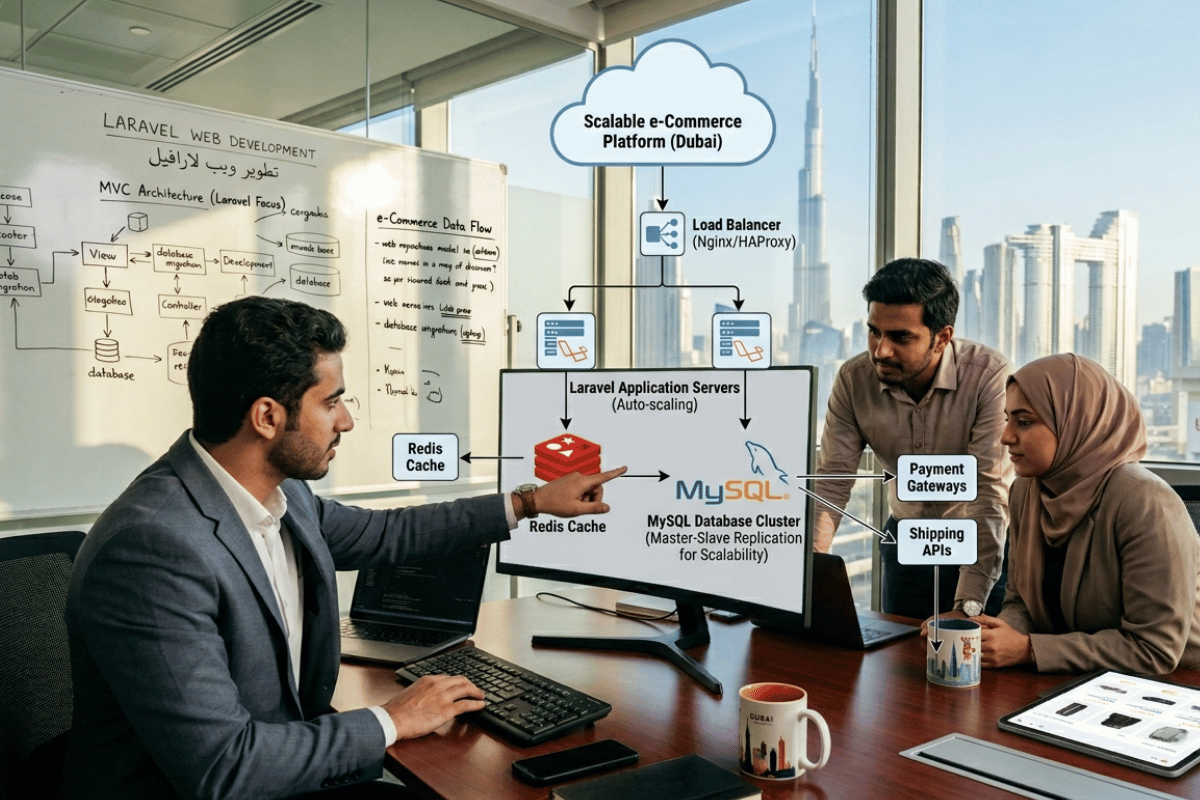
Laravel becomes the clear choice when your project requirements go beyond what a content management system can handle efficiently. If your business needs a custom web application with unique business logic, complex workflows, sophisticated user roles and permissions, real-time features, or deep integrations with other systems, Laravel provides the right foundation. Custom booking systems, property management platforms, multi-vendor marketplaces, subscription billing platforms, logistics management systems, healthcare portals — these are the kinds of applications where Laravel shines and WordPress struggles.
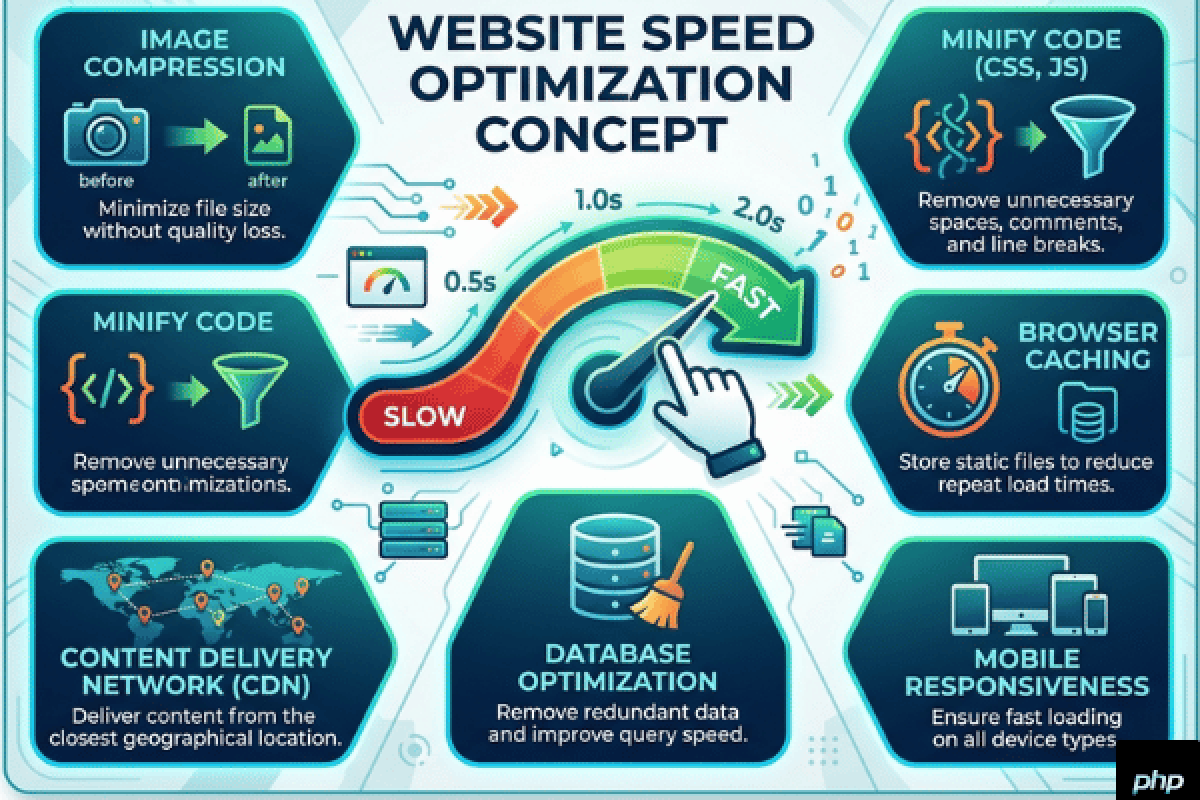
Performance is another area where Laravel has a significant advantage for complex applications. WordPress carries the overhead of its CMS architecture regardless of how simple or complex your use case is — every request runs through WordPress's hook system, loads its plugin stack, and executes its template engine whether you need those features or not. A Laravel application, by contrast, is built specifically for your use case, carrying only the code and dependencies that your application actually needs. This lean architecture results in faster response times, lower server resource consumption, and better performance under high traffic — factors that matter enormously for customer-facing applications where every millisecond of latency affects conversion rates and user satisfaction.
Security Considerations
Security is a critical consideration in the WordPress vs Laravel comparison. WordPress's enormous popularity makes it a high-value target for automated attacks — malicious actors constantly scan the internet for WordPress installations running outdated versions, vulnerable plugins, or weak configurations. WordPress security requires ongoing vigilance: keeping the core, themes, and plugins updated, removing unused plugins, using security hardening plugins, implementing two-factor authentication, and monitoring for suspicious activity. A WordPress site managed by a non-technical team that neglects updates is at significant risk of compromise.
Laravel applications, being custom-built rather than running widely deployed software, present a smaller target for automated attacks. The framework's built-in security features — CSRF protection, SQL injection prevention, XSS protection, and secure authentication scaffolding — provide a solid security foundation, while the absence of a publicly known attack surface (unlike WordPress's well-documented vulnerability patterns) reduces the risk of targeted exploitation. That said, a custom Laravel application still requires secure coding practices, regular dependency updates, and proper server configuration to maintain a strong security posture.
Cost and Timeline Comparison
The cost and timeline differences between WordPress and Laravel projects can be significant. A standard WordPress website — using a commercial theme, standard plugins, and custom content setup — can typically be built in one to three weeks at a fraction of the cost of a custom Laravel application. This makes WordPress an attractive option for businesses with tight budgets or time constraints who need a professional online presence quickly without complex custom functionality.
A custom Laravel application, involving custom database design, business logic implementation, API development, and bespoke user interfaces, requires significantly more development time and investment. However, this investment delivers proportionally greater value for complex use cases. A custom Laravel platform built specifically for your business processes will be more efficient, more maintainable, and more scalable than a WordPress site extended with plugins to approximate the same functionality — and will cost significantly less to maintain and extend over the long term.
The Hybrid Approach
For some businesses, the right answer is a hybrid approach that leverages the strengths of both platforms. A Laravel backend providing a custom REST API for complex business logic and data management, combined with a WordPress front-end or headless CMS for content management, can deliver the best of both worlds. This decoupled or headless architecture gives non-technical content teams the familiar WordPress editing interface they are comfortable with, while the custom Laravel backend handles all the sophisticated application logic that WordPress alone could not support. This approach is particularly popular for businesses that need both a rich content publishing capability and complex custom application features on the same platform.
Conclusion
The choice between WordPress and Laravel is not a matter of one being better than the other — it is a matter of choosing the right tool for the right job. For content-driven websites with standard functionality and non-technical content management requirements, WordPress is an excellent, cost-effective solution. For custom web applications with complex business logic, unique workflows, high performance requirements, or sophisticated integration needs, Laravel is the clear choice. For businesses in Dubai evaluating these options, the most important step is to clearly define your requirements, your growth trajectory, and your long-term technical vision before making the decision — or better yet, consult with an experienced developer who can evaluate your specific situation and recommend the right approach.