Website speed is one of the most important factors in modern web development. Users expect websites to load quickly, and even a delay of a few seconds can cause them to leave. A fast website not only improves user experience but also helps in better search engine rankings.
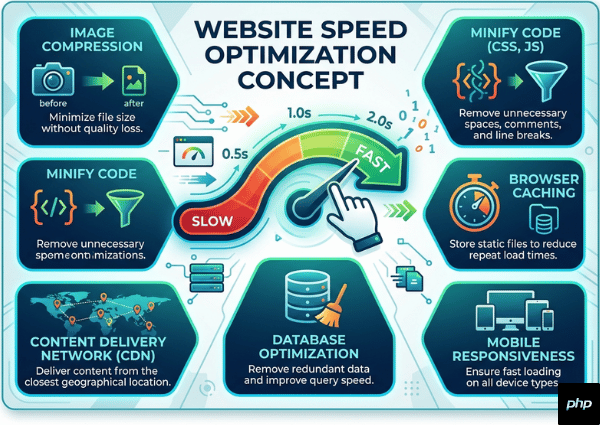
One of the first steps to improve website speed is optimizing images. Large images take more time to load, which slows down the entire page. You should compress images without losing quality and use modern formats like WebP. Also, always define image sizes in your code to avoid layout shifts.
Another key factor is clean and efficient code. Remove unused CSS and JavaScript files. Minify your code to reduce file size. This helps the browser load your website faster. Using tools like bundlers and minifiers can make this process easier and more effective.
Caching is another powerful technique to improve speed. When a user visits your website, certain data can be stored in their browser. This means the next time they visit, the page will load much faster because it does not need to fetch everything again. You can use browser caching and server-side caching to achieve this.
Choosing the right hosting provider also plays a big role. A slow server will affect your website performance no matter how well your code is written. Always choose a reliable hosting service that offers good speed and uptime. You can also use Content Delivery Networks (CDNs) to serve your content from servers closer to the user.
Responsive design is also important for performance. Your website should work smoothly on all devices, including mobile phones and tablets. Use flexible layouts and avoid heavy elements that may slow down smaller devices. Testing your site on different screen sizes helps you find and fix issues early.
Lazy loading is another useful method. It allows images and other media to load only when they are needed. This reduces the initial load time of your website and improves performance, especially for pages with a lot of content.
Reducing the number of HTTP requests can also help. Each file on your website, such as images, scripts, and stylesheets, requires a request to the server. By combining files and reducing unnecessary resources, you can improve load speed.
Monitoring your website performance is also important. Use tools like Google PageSpeed Insights or Lighthouse to test your website. These tools provide useful suggestions that you can apply to make your site faster and more efficient.
In the end, building a fast website is about making smart choices. Focus on performance from the start, and keep testing and improving your site regularly. A fast website keeps users happy and helps your business grow.
Conclusion
A fast website improves user experience and search ranking. Focus on speed from the start.